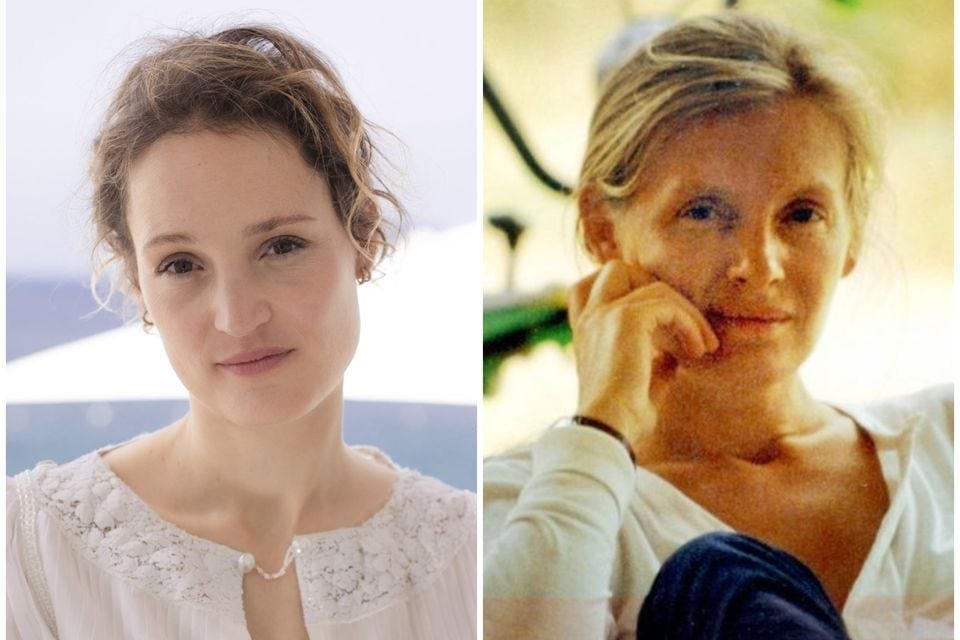
The tranquil, mist-shrouded coastal enclave of Schull in West Cork was permanently transformed two days before Christmas in 1996 when a neighbouring resident made a horrifying discovery along an isolated country lane. Lying near her rustic holiday farmhouse was the body of French television producer Sophie Toscan du Plantier, who had been brutally bludgeoned in the freezing winter chill. The sheer shockwaves of this unexpected violence reverberated far beyond rural Ireland, as the victim was a prominent 39-year-old creative artist seeking peaceful solitary reflection in her cherished Irish retreat.
Initial emergency responders faced complex environmental conditions in rural Toormore that severely hindered the early preservation and collection of vital crime scene evidence. Despite the undeniably violent nature of the fatal assault, critical gaps in immediate evidence gathering created profound, multi-decade hurdles for investigating detectives. This tragic event quickly transformed a serene peninsula into the absolute epicentre of an international legal enigma, crossing European borders and confounding forensic experts for nearly thirty years.
Timeline of Events: From December 1996 to the Cold Case Review
Following the devastating discovery in late December 1996, the initial police inquiry rapidly focused on local residents and potential witnesses residing within the immediate West Cork region. Investigating officers conducted thousands of comprehensive interviews while meticulously trying to construct an accurate timeline of the victim’s final hours spent near her secluded cottage. However, the absence of a direct physical connection left the official case anchored almost entirely in circumstantial allegations and fragmented witness statements.
As decades drifted by without formal criminal charges brought within Ireland, independent international legal mechanisms began to operate. A dramatic milestone occurred in 2019 when a French judicial tribunal conducted a trial in absentia, issuing a formal conviction against their primary suspect despite his physical absence. By June 2022, An Garda Síochána officially launched an intensive review under the Serious Crime Review Team, utilizing state-of-the-art forensic collection technology to re-evaluate every remaining piece of physical evidence.
The Prime Suspect: Who Was Ian Bailey?
British freelance reporter Ian Bailey had relocated to West Cork during the mid-1990s and swiftly emerged as the central figure of interest for investigating Irish detectives. His very early journalism regarding the crime contained granular details that authorities firmly believed only someone present at the scene could possess, igniting immediate suspicion among local officers. Furthermore, visible physical scratches on his arms and controversial alleged admissions made during social encounters kept him firmly situated at the dark heart of the narrative.
Throughout his turbulent life, Bailey maintained absolute innocence and consistently denied any involvement in the murder of Sophie Toscan du Plantier. Senior Irish legal directors repeatedly determined that existing evidence was legally insufficient to satisfy the stringent evidentiary threshold required for prosecution in common law courts. Following his death from a heart condition in early 2024, the bitter stand-off between jurisdictions remained unresolved, leaving lingering questions about whether his persistent claims of innocence could ever be verified.
Recent Forensic Breakthroughs: Advanced DNA Collection & Touch DNA

In recent years, dedicated cold-case forensic specialists applying modern biological extraction equipment have uncovered crucial physical evidence previously missed by standard swabbing protocols. By employing advanced techniques like the M-Vac wet-vacuum system, scientists successfully isolated foreign male biological material trapped inside physical exhibits, including the victim’s blood-stained boots. This microscopic material provided detectives with a fresh genetic footprint that was entirely inaccessible during the original nineties investigation.
Crucially, preliminary cross-checks indicate that this newly extracted male genetic profile does not match the biological signature of Ian Bailey, who voluntarily provided updated DNA samples shortly before his death. Police forces across Europe are now actively comparing this unidentified genetic profile against major international databases. This critical forensic breakthrough offers renewed hope for a definitive resolution and has prompted legal advocates to question past foreign judicial rulings regarding the case.
International Legal Conflict: Irish vs. French Justice Systems
The investigation into the tragic death of Sophie Toscan du Plantier exposed unprecedented friction between the distinct legal philosophies of Ireland and France. The Irish common law system enforces strict boundaries against circumstantial claims, requiring proof beyond a reasonable doubt alongside admissible physical evidence before initiating a criminal trial. Consequently, Irish courts consistently rejected multiple European Arrest Warrants seeking the extradition of the primary suspect across several decades.
Conversely, the French inquisitorial judicial framework allows formal trials when a French citizen is victimized abroad, regardless of whether the accused attends the courtroom. This fundamental systemic divergence led to the 2019 Paris trial in absentia, establishing a rare scenario where a suspect was pronounced legally guilty in France while remaining a free citizen in Ireland. This persistent international legal divide underscores the profound diplomatic complexities involved when reconciling differing criminal justice models.
Media Focus & Pop Culture Impact
Over the decades, the mysterious circumstances surrounding Sophie Toscan du Plantier evolved from a quiet rural tragedy into a global true-crime phenomenon. Intense international interest was reignited by the acclaimed audio series West Cork, which introduced millions of global listeners to the intricate details and eccentric personalities embedded within the story. The multi-layered narrative provided rich material for immersive audio storytelling, establishing a new benchmark for contemporary investigative broadcasting.
Major streaming networks further amplified this worldwide fascination through competing high-profile visual documentary series like Netflix’s Sophie: A Murder in West Cork and Sky’s Murder at the Cottage. While these global productions ensured the case remained at the forefront of public consciousness, they also starkly highlighted the ongoing emotional burden borne by the victim’s family, who continue their steadfast campaign for authentic legal closure.
Conclusion: The Pursuit of Justice After Three Decades
Nearly thirty years after that fateful December morning, the loss of Sophie Toscan du Plantier remains a deeply felt, open wound for her surviving family and the tight-knit West Cork community. Dedicated officers belonging to the Garda Serious Crime Review Team continue to systematically follow every viable forensic thread, relying on modern scientific evolution to finally illuminate the truth.
The unwavering determination displayed by the victim’s son, Pierre-Louis Baudey-Vignaud, ensures that her memory and the pursuit of her killer will never fade. As cutting-edge scientific methods continue to extract hidden secrets from preserved physical evidence, real hope remains that modern forensic technology will finally provide definitive answers, yielding long-awaited justice for Sophie Toscan du Plantier.
Frequently Asked Questions
Has the murder of Sophie Toscan du Plantier ever been officially solved?
The case remains an active cold-case homicide investigation led by An Garda Síochána in Ireland. Although a French court convicted Ian Bailey in absentia in 2019, Irish authorities never charged him due to insufficient direct evidence, meaning the case remains open under Irish law.
Who was the main suspect in the Sophie Toscan du Plantier case?
English freelance journalist Ian Bailey was long considered the primary suspect by police officers and was arrested twice during the original investigation. He maintained his innocence throughout his life until his death in 2024, and was never formally charged by Irish prosecutors.
What is the new DNA evidence found in the Sophie Toscan du Plantier investigation?
Using modern forensic equipment such as the M-Vac wet-vacuum collection system, cold-case specialists successfully isolated a previously undetected male biological sample from physical evidence preserved from the crime scene, including the victim’s boot.
Did Ian Bailey’s DNA match the evidence at the crime scene?
Recent forensic reviews indicate that the foreign male DNA trace recovered using modern extraction techniques does not match Ian Bailey, who voluntarily provided updated genetic samples prior to his death.
Why was Ian Bailey convicted in France but not in Ireland?
France operates under an inquisitorial legal system that permits trials in absentia for crimes committed against French nationals overseas. Ireland operates under a common law system, which enforces strict standards of direct admissible evidence before initiating a criminal trial.
For a deeper dive into the media portrayal and the legal complexity surrounding the suspect, watch this discussion on the
This video is relevant as it provides valuable insight into how filmmakers and journalists re-examined the evidence and media framing surrounding the case.
You may also read: Discovering the Best Freezing Techniques