Learning how to clean terracotta tiles correctly is essential because terracotta flooring brings a warm, rustic, and timeless aesthetic to British homes, yet this gorgeous natural material demands respectful treatment due to its highly porous composition. Because these beautiful clay tiles absorb moisture and liquids exceptionally easily, improper maintenance can quickly lead to structural degradation, surface pitting, and unsightly staining across your living spaces.
Mastering how to clean terracotta tiles prevents severe issues like efflorescence or stripped sealers that completely ruin the handmade aesthetic of your floors. Therefore, understanding your flooring’s unique characteristics ensures you avoid harsh supermarket chemicals and instead adopt gentle, bespoke UK-appropriate cleaning habits tailored specifically for long-term material longevity.
Daily and Weekly Maintenance Routine
Establishing a consistent dry sweeping schedule when figuring out how to clean terracotta tiles is vital because trapped dirt acts like microscopic sandpaper underfoot, gradually wearing away the protective surface layer over time. Utilizing a vacuum cleaner equipped with a soft-bristle brush attachment effectively captures loose grit without scratching the delicate clay body of your floor during regular upkeep.
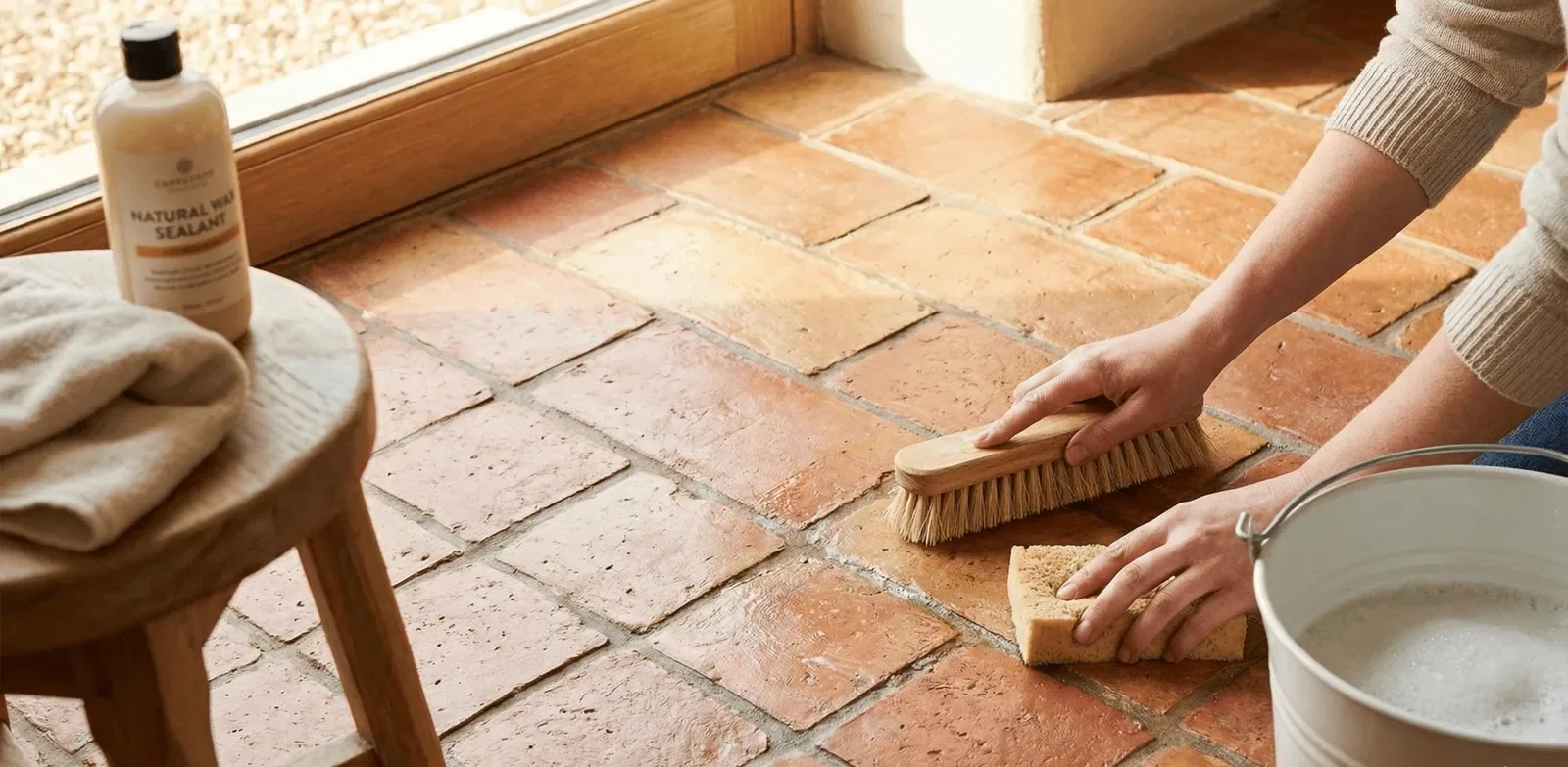
When damp mopping as part of knowing How to Clean Terracotta Tiles, always combine lukewarm water with a specialized pH-neutral stone soap while wringing your mop until it is barely damp. Avoid boiling or hot water entirely, as excessive heat can soften underlying sealers and leave sticky residues that trap even more household grime.
Removing Stubborn Stains and Grease Spots
Kitchen accidents happen frequently, but mastering how to clean terracotta tiles means treating fresh food spills and cooking oil splashes immediately to prevent deep, permanent discoloration within the porous clay matrix. Covering stubborn grease spots with thick layers of baking soda or talcum powder successfully draws out trapped oils over several hours without damaging the surrounding material.
Homeowners exploring how to clean terracotta tiles must completely avoid popular acidic hacks like white vinegar, lemon juice, or bleach, which trigger harmful chemical reactions on natural earthen surfaces. These aggressive substances permanently break down unglazed or handmade clay bodies, turning a minor kitchen smudge into a costly professional restoration nightmare.
Annual Deep Cleaning and Stripping Failed Sealers

Heavily soiled or neglected floors occasionally require a comprehensive annual deep clean when implementing how to clean terracotta tiles using dedicated stone cleaning solutions and advanced extraction techniques. Instead of spreading dirty liquid around with a standard domestic mop, industry professionals recommend using a specialized wet vacuum to lift suspended grime completely away.
When old wax layers or sealers turn cloudy, scaling, or fail entirely across high-traffic zones, applying a heavy-duty degreaser or tile stripper becomes necessary for effective property maintenance. Gently agitate the surface with a soft brush or low-speed buffer, rinse meticulously, and allow the terracotta to dry completely for up to two days.
How to Re-Seal Terracotta Floors After Cleaning
Allowing absolute drying time ranging strictly between twenty-four and forty-eight hours is non-negotiable before introducing any new protective treatments to your floor after learning how to clean terracotta tiles. Trapping residual moisture underneath a fresh sealant coat creates unsightly white cloudiness and prevents proper chemical adhesion to the porous terracotta substrate.
Selecting appropriate impregnating sealers, natural waxes, or traditional boiled linseed oils depends heavily on your specific aesthetic preferences and room usage. Always perform a simple droplet test afterward to verify that the newly applied finish effectively beads water and resists daily wear.
Troubleshooting Common Terracotta Tile Problems
High-traffic hallways and busy kitchens often develop dull patches that diminish the overall vibrancy of your handmade terracotta flooring. Addressing these localized zones with specialized maintenance balms restores their original luster without requiring a full floor restoration project across the entire room.
Grout lines frequently suffer from discoloration over the years, but you can correct this safely without harming the adjacent clay edges by using precision cleaning tools. Additionally, older or period properties in the UK frequently combat dampness, requiring careful monitoring to manage salt deposits effectively.
Frequently Asked Questions
Can I use white vinegar when figuring out how to clean terracotta tiles safely?
Absolutely not, because acidic substances break down the natural clay structure and strip protective sealers from the surface.
How often should terracotta floors be re-sealed during routine maintenance?
Typically every two to three years, depending heavily on household foot traffic and general wear patterns.
Are terracotta tiles suitable for UK bathrooms and wet rooms?
Yes, provided they are thoroughly sealed with specialized moisture-resistant barriers to handle humidity.
What is the best commercial cleaner for antique terracotta?
Always choose a gentle, pH-neutral stone cleaner designed specifically for porous earthen materials.
How do I remove stubborn white salt deposits when learning how to clean terracotta tiles?
Treat efflorescence carefully using breathable stone poultices and specialized masonry cleaning solutions.
You may also read: Living in Neath: Lifestyle, Amenities, and Transport