
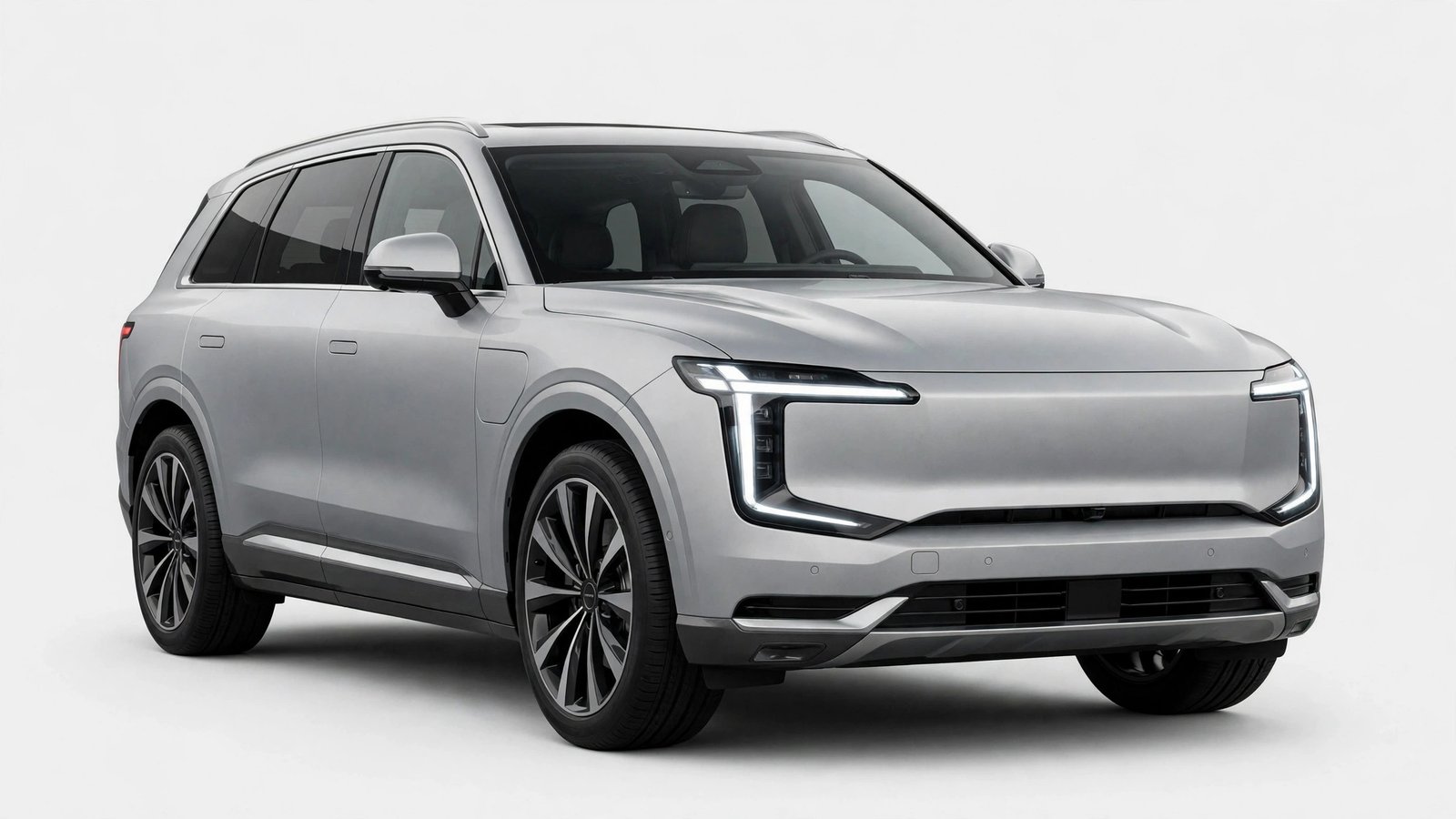
The Volvo EX90 is Volvo Cars’ flagship fully electric SUV — a large, three-row model with seating for up to seven, above the plug-in hybrid XC90. It was designed from the start as an EV on Volvo’s SPA2 platform, with a floor battery pack and a software-led cabin.
This guide covers range, charging, power, space, safety and US/UK prices as of October 2026, using Volvo’s official figures (EPA for the US, WLTP for the UK/Europe).
What Is the Volvo EX90?
Revealed in November 2022, the EX90 entered production in June 2024, with deliveries from late 2024 (2025 model year), followed by a significantly updated 2026 model year:
- Type: Large luxury SUV, fully electric only — there is no petrol or hybrid EX90
- Seating: 7 seats as standard in the UK; 6- or 7-seat layouts in the US, with the 6-seat version using second-row captain’s chairs
- Position: Volvo’s electric flagship SUV, sold alongside — not instead of — the XC90
- Platform: SPA2
- Built for North America in: Ridgeville, near Charleston, South Carolina, USA
Both the EX90 and XC90 are large 6- to 7-seat SUVs. The XC90 is a plug-in or mild hybrid, while the EX90 is fully electric and part of Volvo’s line-up of software-defined cars, which can improve via over-the-air updates.
Whichever end of the market you are shopping at, the buying maths matters — for buyers on a tight budget, our guide explains how $500 down on a car with no credit check deals work.
Size, Seating and Cargo Space
Volvo Cars UK lists the EX90 at 5,037 mm (198.3 inches) long, 1,964 mm (77.3 inches) wide — 2,113 mm including mirrors — 1,744 mm (68.7 inches) high, with a 2,985 mm (117.5-inch) wheelbase, providing three rows of seats:
- The third row is best for children or occasional adult use, as in most SUVs this size.
- Cargo is 324 litres behind the third row, 690 litres behind the second row, and up to 2,082 litres folded (Volvo UK).
- The front compartment (frunk) adds 46 litres (UK) / 1.6 cubic feet (US) — useful for cables.
US cargo figures use a different method (up to 75.4 cubic feet, rows folded, 7-seat version), so compare only within the same market. Towing: Volvo US lists 3,307 lb (Single Motor) and 4,850 lb (Twin Motor); Volvo UK lists 1,500 kg and 2,200 kg.
Powertrains, Battery and Performance
The specification changed substantially for 2026, so both versions are set out here.
Launch specification (2025 model year)
At launch, every EX90 used one battery pack: 111 kWh gross, 107 kWh usable, on a 400-volt architecture, with DC charging up to 250 kW and a 10–80% charge in about 30 minutes. The Twin Motor produced 402 hp in US specification (0–60 mph in 5.7 seconds); the Twin Motor Performance produced 510 hp (0–60 mph in 4.7 seconds). European figures were 408 PS and 517 PS for the same cars.
Current specification (2026 model year)
For 2026, Volvo moved to an 800-volt architecture, added a Single Motor rear-wheel-drive entry version, and now offers two battery sizes:
Single Motor — rear-wheel drive
- Battery: 92 kWh nominal
- Power: 329 hp (US) / 333 hp, 245 kW (UK); torque 354 lb-ft / 480 Nm
- 0–60 mph in 6.6 seconds (US); 0–62 mph in 6.8 seconds (UK)
Twin Motor — all-wheel drive
- Battery: 106 kWh nominal
- Power: 449 hp (US) / 456 hp, 335 kW (UK); torque 494 lb-ft / 670 Nm
- 0–60 mph in 5.3 seconds (US); 0–62 mph in 5.5 seconds (UK)
Twin Motor Performance — all-wheel drive
- Battery: 106 kWh nominal
- Power: 670 hp (US) / 680 hp, 500 kW (UK); torque 642 lb-ft / 870 Nm
- 0–60 mph in 4.0 seconds (US); 0–62 mph in 4.2 seconds (UK)
Volvo Car USA calls the 670-hp Performance version its most powerful car ever. All versions have a single-speed transmission and a 112 mph (180 km/h) top speed. Small US/UK horsepower differences reflect measurement and rounding.
Volvo EX90 Key Specs Table (2026 Model Year)
| Specification | Single Motor | Twin Motor | Twin Motor Performance |
|---|---|---|---|
| Powertrain | Single motor, RWD | Dual motor, AWD | Dual motor, AWD |
| Battery (nominal) | 92 kWh | 106 kWh | 106 kWh |
| Electrical system | 800 V | 800 V | 800 V |
| Power (UK) | 333 hp (245 kW) | 456 hp (335 kW) | 680 hp (500 kW) |
| Power (US) | 329 hp | 449 hp | 670 hp |
| Torque (UK) | 480 Nm | 670 Nm | 870 Nm |
| 0–62 mph (UK) | 6.8 s | 5.5 s | 4.2 s |
| 0–60 mph (US) | 6.6 s | 5.3 s | 4.0 s |
| WLTP range (UK) | Up to 351.1 miles | Up to 383.4 miles | Up to 376.6 miles |
| EPA range, up to (US) | Up to 293 miles | Up to 305 miles | Up to 305 miles |
| DC charging, max | 350 kW | 350 kW | 350 kW |
| DC charge 10–80% | 22 min | 22 min | 22 min |
| AC full charge 0–100% | 10 hours | 11 hours | 11 hours |
| Seats | 7 | 6–7 (US) / 7 (UK) | 6–7 (US) / 7 (UK) |
| Top speed | 112 mph | 112 mph | 112 mph |
Sources: Volvo Cars US/UK specification pages, October 2026. Single Motor note: Volvo US lists 291 miles (21-inch wheels, range FAQ) and 293 miles (specifications summary) — the table uses 293.
Range Explained: EPA vs WLTP
The same car carries two headline range numbers depending on where it is sold — they come from different test cycles.
US figures — EPA cycle
These EPA-estimated ranges are published by Volvo Cars US on its official EX90 page. US ratings can also be checked on FuelEconomy.gov, the US Department of Energy and EPA site.
- All-wheel drive: Up to 305 miles (21-inch wheels); up to 298 miles (20- or 22-inch wheels)
- Rear-wheel drive: Up to 291 miles (21-inch wheels); up to 276 miles (20- or 22-inch wheels)
The 2025 model was rated at up to 310 miles (21-inch) and 300 miles (20-/22-inch). The 2026 car’s slightly lower figure, with much faster charging, reflects the 106 kWh battery and 800-volt system.
UK and European figures — WLTP cycle
Volvo Cars UK lists preliminary WLTP ranges of up to 351.1 miles (Single Motor), 383.4 miles (Twin Motor) and 376.6 miles (Twin Motor Performance). WLTP figures are almost always higher than EPA figures — do not compare them directly. Real-world range varies with speed, weather, wheel size and load.
Charging: Home, Public and the 800-Volt Upgrade
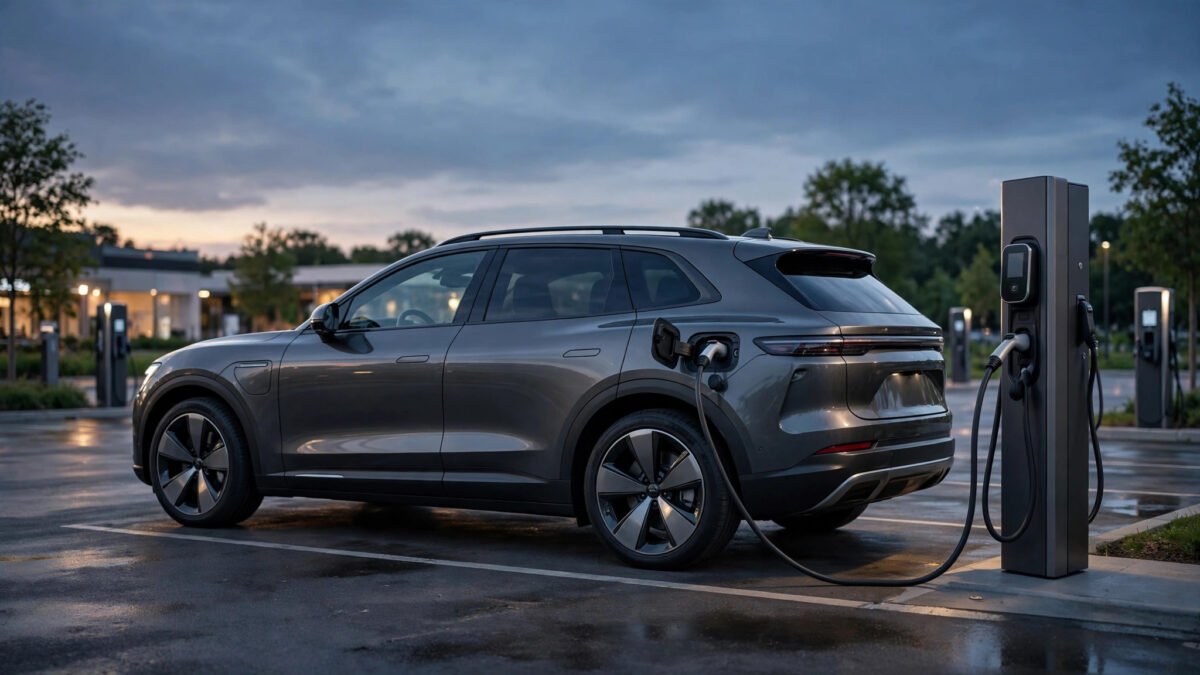
DC fast charging
- Launch model (400-volt): Up to 250 kW, about 30 minutes from 10% to 80%
- 2026 model (800-volt): Up to 350 kW, as fast as 22 minutes from 10% to 80% at a 350 kW charger (Volvo US/UK)
Volvo Car USA states the 800-volt system can add up to 155 miles in 10 minutes at a compatible station. Actual speed depends on charger, battery temperature and state of charge; preconditioning helps. In the US, Volvo states its electric cars support the North American Charging Standard (NACS), giving access to Tesla’s Supercharger network alongside CCS. In the UK and Europe, the EX90 uses CCS Type 2.
Home and AC charging
All versions have an 11 kW on-board AC charger: a full charge takes about 10 hours (92 kWh) or 11 hours (106 kWh). Most owners charge overnight and rarely start from empty. The launch car had hardware intended for bidirectional charging, subject to equipment and software — availability varies by market, so confirm vehicle-to-home support in writing if it matters to you.
Safety and Driver Assistance
Safety is central to Volvo’s pitch — and where the specification has changed most visibly.
What the EX90 launched with
Volvo presented the EX90 as its safest car ever, built around its Safe Space Technology suite: a roof-mounted LiDAR sensor from Luminar as standard, plus cameras, radars and ultrasonic sensors, a Driver Understanding system monitoring the driver’s gaze and attention, an Occupant Sensing system using interior radar to detect a child or pet left in the cabin, and Pilot Assist with adaptive cruise control, lane centring and Lane Change Assist.
What changed for 2026: LiDAR removed
Older articles still describe LiDAR as standard — that is no longer correct. Volvo Cars US states LiDAR is no longer available for the EX90. Reporting in November 2025, including a Volvo Cars USA spokesperson statement reported by The Drive, confirmed Volvo ended its relationship with Luminar and removed LiDAR from model year 2026 onward, citing supply-chain risk, while stating the car could still deliver a high level of safety via core computing and its remaining sensors.
Volvo UK specifications for the 2026 car still list Pilot Assist and Park Pilot Assist, Blind Spot Information System (BLIS), collision avoidance including intersection autobrake, pedestrian and cyclist steering avoidance, rear cross traffic alert with auto brake, a 360-degree camera, driver understanding, occupant sensing, and Emergency Stop Assist, which can stop the car and place an emergency call if the driver is unresponsive.
Every 2026 EX90 gains a dual NVIDIA DRIVE AGX Orin core computer (500 TOPS), enabling connected safety alerts and expanded emergency steering in darkness, per Volvo Car USA — which said 2025 owners would receive this upgrade free via a workshop visit. None of this makes the EX90 self-driving; Pilot Assist is driver support only.
Interior, Infotainment and Technology
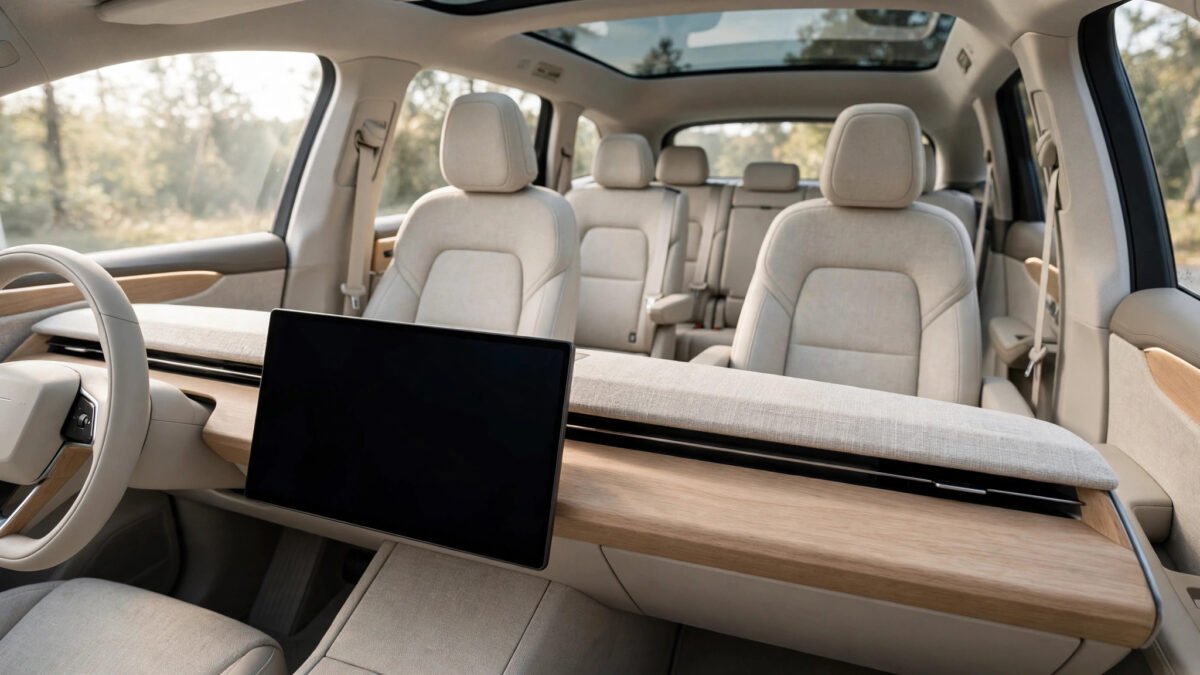
The cabin is minimalist, with few physical buttons and most functions on the touchscreen. Verified features from Volvo’s specifications:
- 14.5-inch centre display (portrait), 9-inch driver display and available head-up display
- Google built-in: Google Assistant, Maps and Play integrated into the car, included via a digital services package for four years (Volvo US/UK), after which new terms and fees apply on renewal
- Wireless Apple CarPlay standard; UK specifications also list wireless Android Auto
- Over-the-air updates, phone key and Volvo Cars app remote functions
- Audio: Bose Premium listed; optional Bowers & Wilkins system with Dolby Atmos on higher specifications
- Comfort (by trim): Four-zone climate, heat pump, heated steering wheel, powered tailgate, and on higher levels active air suspension, ventilated/massaging front seats and an electrochromic panoramic roof with adjustable tint, new for 2026
The main US levels are Plus and Ultra. Check the equipment list for the exact trim and year — do not assume a feature from a review is included.
Trims and Prices as of October 2026
Starting prices are from Volvo’s official sites, checked October 2026, excluding some fees and options.
United States
- Starting MSRP: $78,090 for the 2026 EX90, according to Volvo Cars US, including a $1,395 destination fee. Taxes, title, registration and retailer fees are extra.
- The range runs from Single Motor Plus at the entry point to Twin Motor Performance, in Plus and Ultra levels. Older articles quoting $76,695 or $79,995 usually refer to specific earlier trim prices — check the live configurator.
United Kingdom
Volvo Cars UK specifications list:
- Single Motor: From £73,160
- Twin Motor: From £79,060
- Twin Motor Performance: From £98,160
Confirm on-the-road pricing in the Volvo UK configurator. Budget at premium levels for insurance and tyres, offset in part by lower energy costs if you charge at home off-peak.
Where the EX90 Is Built
Volvo Cars announced the start of production on 5 June 2024 at its factory outside Charleston, South Carolina, in Ridgeville — its first US plant, opened in 2018, with capacity for up to 150,000 cars per year and a battery pack production line. US-market EX90s are built there; cars for some other markets are also produced in China. Production had been delayed while Volvo resolved software issues with the new core computing system.
The 2026 Update in Summary
Changed for 2026: 800-volt architecture (was 400-volt); DC charging up to 350 kW (was 250 kW), 10–80% in 22 minutes (was about 30 minutes); 92 kWh and 106 kWh batteries replacing the single 111 kWh pack; new Single Motor version; Performance power up to 670 hp (US) / 680 hp (UK); new NVIDIA computer; Emergency Stop Assist; electrochromic roof option; LiDAR removed.
Carried over: SPA2 platform, dimensions and layout; Google built-in; Pilot Assist, driver understanding and occupant sensing; South Carolina production for the US. Volvo Car USA notes the EX90 was the 2025 World Luxury Car of the Year winner.
Choosing between a discounted 2025 car and a 2026 car comes down to charging versus LiDAR: the 2025 car has the larger battery and LiDAR; the 2026 car charges faster, has the newer computer and a cheaper entry point, but no LiDAR option.
Who Should Consider the EX90?
The EX90 suits buyers who need three rows, want to go fully electric, can charge at home, and value safety technology over sporty handling. On a test drive, check third-row access with your child seats, the touchscreen controls, wheel size versus range, wallbox cost, and the exact equipment on your trim.
Is the Volvo EX90 fully electric?
Yes. There is no petrol, diesel or hybrid version. Volvo’s large SUV with an engine is the XC90 plug-in and mild hybrid.
How far can the Volvo EX90 go on a charge?
Up to 305 miles on the US EPA cycle (all-wheel drive, 21-inch wheels) and up to 383.4 miles on the WLTP cycle (Twin Motor, Volvo UK). EPA and WLTP figures are not directly comparable, and real-world range falls in cold weather and at high speeds.
How long does the Volvo EX90 take to charge?
As fast as 22 minutes from 10% to 80% on a 350 kW DC charger (2026 model, per Volvo). At home on an 11 kW wallbox, a full charge takes about 10 hours (92 kWh) or 11 hours (106 kWh). The 2025 model took about 30 minutes (10–80%, up to 250 kW).
How many seats does the Volvo EX90 have?
Seven as standard in the UK. In the US, buyers can choose seven seats or six seats with second-row captain’s chairs.
Does the Volvo EX90 still have LiDAR?
No, not on new 2026 cars. It launched with standard LiDAR, but Volvo removed it from 2026 onward. The car continues with cameras, radars, ultrasonic sensors, Pilot Assist, driver understanding and occupant sensing.
Frequently Asked Questions
Bottom Line
The EX90’s appeal rests on space, safety systems and charging convenience. The 2026 update is unusually substantial — faster charging, a cheaper entry point, a more powerful Performance version and a new computer, balanced against a smaller battery than the launch car and no LiDAR. For buyers who can charge at home and need three-row flexibility, it remains one of the most complete premium electric SUVs on sale — provided you use the correct model-year figures.