Dropping your favourite mobile phone and watching it hit the pavement is an absolute nightmare scenario for any gadget owner. When you pick it up and notice a spiderweb of ugly fractures, an instant wave of panic sets in across your chest. Fortunately, that severe damage is frequently restricted entirely to the sacrificial glass layer rather than your expensive native display. Understanding how to fix broken screen protector issues properly will allow you to refresh your device quickly and avoid paying for unnecessary hardware repairs.
While many users desperately hope to mend the surface damage using household tricks, a cracked glass layer cannot actually be fused back together safely. The absolute best way regarding how to fix broken screen protector situations is to completely remove the shattered piece, prepare your clean display, and apply a fresh replacement. Taking immediate action prevents loose glass splinters from causing finger injuries and ensures your touch controls remain completely responsive.
Can You Repair a Cracked Screen Protector? (Myth vs Reality)
Many internet videos suggest quick home fixes using everyday remedies like household toothpaste, clear nail polish, or automotive windshield repair kits. Unfortunately, applying these liquid substances directly over cracked glass does not resolve the underlying structural damage and often seeps underneath, causing permanent stains on your actual display. Learning how to fix broken screen protector damage correctly starts with rejecting these dangerous online hacks.
To determine if your actual mobile screen is safe, gently run your fingernail across the visible crack line. If your fingernail catches on the jagged surface edges, the damage is isolated to the top protective glass. Knowing how to fix broken screen protector problems means accepting that removal is the only safe solution to restore your mobile phone to pristine condition.
Essential Prep: Tools You Need Before Starting
Before you attempt to strip away the damaged layer, gathering the correct basic tools ensures a smooth and scratch-free process. You will need clear adhesive tape, a thin plastic card, a microfibre cloth, isopropyl alcohol wipes, and a hairdryer. Knowing how to fix broken screen protector issues at home requires using soft plastic tools rather than metal blades that permanently scratch glass.
Preparing your workspace is just as important as having the right equipment on hand for the task. Choose a well-lit area with minimal dust floating in the air, such as a tidy desk or kitchen counter. Having all your cleaning supplies nearby streamlines the entire process so you can move efficiently from removing the old broken layer to applying a fresh shield.
Step 1: Preparing Your Phone & Securing Loose Glass

Safety should always be your top priority whenever you are dealing with broken or shattered tempered glass materials. Turn off your mobile phone completely to avoid accidental screen presses and to clearly spot surface dust. When considering how to fix broken screen protector hazards, covering the entire cracked surface with a layer of clear sticky tape holds all loose splinters together during removal.
Taping down the fractured surface prevents small glass shards from flaking off onto your workspace or poking your fingers. It also keeps the cracked protector in one continuous piece as you peel it off, making the entire process significantly cleaner. Once the surface is safely secured under sticky tape, you are ready to begin lifting the adhesive edges.
Step 2: How to Safely Remove a Broken Screen Protector
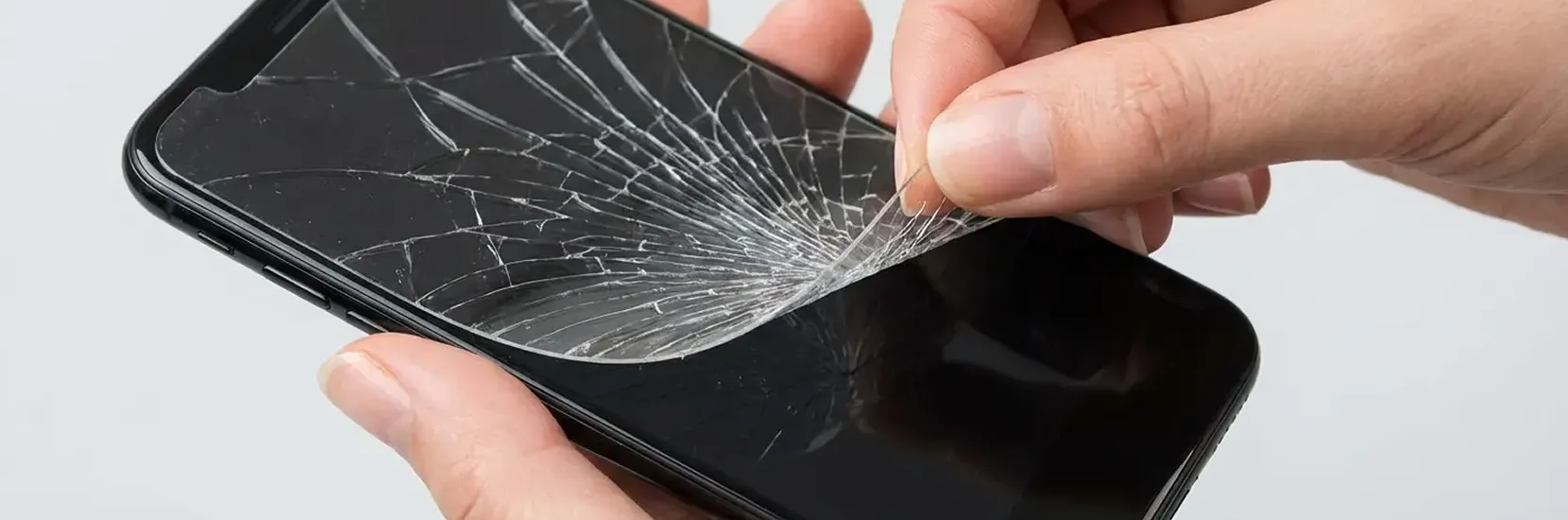
To remove the damaged layer without marking your mobile display, locate the corner with the largest gap or crack. Gently insert the edge of a plastic card or your fingernail underneath that corner to break the adhesive bond. Anyone learning how to fix broken screen protector setups should remember to lift slowly and evenly rather than yanking the glass upward abruptly.
If the adhesive backing holds too tightly onto the display, apply gentle heat using a hairdryer on its lowest setting. Hold the hairdryer roughly fifteen centimetres away for ten seconds to soften the sticky glue layer underneath. Slowly slide your plastic card across the entire underside until the damaged glass lifts off completely in one flat piece.
Step 3: Cleaning & Inspecting Your Screen After Removal
With the old layer removed, your naked screen will likely show leftover glue marks, oil prints, and tiny dust particles. Wipe down the entire glass face using an isopropyl alcohol pad to dissolve any residual adhesive residue. Mastering how to fix broken screen protector problems involves spending extra effort on this cleaning stage to guarantee a spotless base.
After wiping with alcohol, buff the screen with a lint-free microfibre cloth until the surface shines clearly under light. Use a small piece of low-tack tape to dab away any stubborn microscopic dust specks remaining on the display. Inspect the bare screen thoroughly from various angles to confirm that the factory display underneath remains completely undamaged.
Step 4: Installing a New Screen Protector (Bubble-Free Finish)
Now that your phone display is pristine, you can complete your repair by fitting a new protective layer. Unpeel the protective backing film from your fresh tempered glass, being careful not to touch the exposed sticky side with your fingers. Align the top edges carefully with your phone camera cutout, ear speaker, and outer border lines.
Gently lower the glass onto the screen and press down firmly right in the middle of the panel. The silicon adhesive will naturally spread outward across the display surface automatically. Use a soft card wrapped in microfibre to push any lingering air bubbles toward the outer edges until your brand-new screen protector looks seamless and completely flat.
How to Prevent Screen Protector Cracks in the Future
While screen protectors are designed to absorb impact energy so your actual display survives, picking higher quality materials reduces frequent cracking. Consider choosing high-grade 9H tempered glass options or flexible TPU hydrogel films that absorb drops without shattering. Knowing how to fix broken screen protector issues also means upgrading your protective gear to match your daily routine.
Additionally, pairing your newly installed glass with a protective phone case featuring raised front edges provides superior side-impact defense. Try to avoid storing your mobile phone in pockets or bags containing sharp metallic items like house keys or loose coins. Taking these proactive steps keeps your display clear, secure, and ready for everyday use without constant replacements.
Conclusion
Successfully understanding how to fix broken screen protector damage comes down to safe removal and proper surface preparation. Rather than relying on unreliable repair hacks, taking off the damaged glass and replacing it protects both your hands and your underlying phone screen. A quick twenty-minute effort restores your mobile display to pristine visual clarity and full touch responsiveness.
Remember that a shattered screen protector ultimately means the accessory successfully performed its job by protecting your main device screen. By following a structured approach involving tape preparation, gentle lifting, thorough cleaning, and careful reapplication, your phone will look brand new once again. Keep a spare protector at home so you are always prepared for future accidental drops.
Frequently Asked Questions (FAQs)
Can I use superglue to fix a broken screen protector?
No, using superglue or liquid adhesives will not mend shattered tempered glass surfaces. Liquid glue can easily seep around the edges of the protector, damaging your phone display underneath and permanently fusing the broken piece to your actual device screen.
How do I know if my actual phone screen is cracked or just the protector?
Gently run your fingernail across the crack lines on your screen. If your nail catches on the top surface, the damage is restricted to your removable protector; if the surface feels completely smooth but you see lines or discoloured pixels underneath, your actual display panel is cracked.
Is it safe to leave a cracked screen protector on my phone?
It is not recommended to keep a broken glass layer on your phone for extended periods. Sharp edges can cause tiny finger cuts, loose glass dust can enter your phone speakers, and the compromised glass offers zero protection against future accidental drops.
How do you get off a screen protector that is stuck hard?
If the adhesive layer refuses to peel away easily, use a hairdryer on a low heat setting to warm the screen for ten seconds. The mild heat softens the sticky silicon bond underneath, allowing you to slide a plastic card beneath the corner safely.
Can you wash and reuse a tempered glass screen protector?
No, once a tempered glass protector is peeled away from a screen, the silicon adhesive layer loses its structural integrity. Dust particles immediately attach to the sticky underside, making it impossible to reapply without creating permanent air bubbles and poor touch sensitivity.
You may also read: Final Goodbyes and Liquidation Sales Marking the End of an Era